
10 NOV 2026  5 MIN READ
One van break-in occurs every 7 minutes in the UK, with over 100,000 break-ins recorded in recent years. For thieves, a van full of tools represents quick, valuable gains.
In the event of a break in, you’re left with an empty cargo area, and if you’re especially unlucky, a wrenched-off door or smashed windows. In the worst-case scenario perpetrators may simply take the whole van and your livelihood along with it.
Your insurance policy may protect you from financial loss and keep you on the road – but if you’re self-employed, with no back-up plan or pool of company vehicles to draw on, having a damaged van or lacking the tools of your trade can cause your business to grind to a halt.
Here, we look at some straightforward measures you can take to help make your van less of a target, hopefully preventing thieves from attempting to break into your van in the first place.
Location and behaviour
The first rule of keeping your van safe? Location, location, location...
Secure Parking
A van parked on its own in a dark alley is going to be an easier target than one parked under a street light or in a busy car park with CCTV. If you’re out and about, look for car parks that meet the Park Mark safe parking criteria (a quarter of the UK’s car parks have achieved this).
Do you keep your work van at home most nights? If your driveway is gloomy, think about installing motion-sensor lighting to further deter would-be thieves. If you have a garage that’s large enough to hold your van, make sure to tuck it away indoors every night – breaking into a house or secure outbuilding to steal tools is harder than getting into a vehicle, and an opportunist tool thief may balk at the thought of burglary.

No valuables left behind
Don’t just have a sign stating ‘No tools left in van overnight’ – actually remove them at the end of each working day. If you must leave anything valuable in the van, make sure it’s not visible. A thief is less likely to break into your vehicle ‘just in case’ there’s something worth stealing.
Don’t fall into the trap of assuming your van insurance covers tools kept in the van overnight. Always review your policy to see what’s included, and if you have valuable tools, consider getting a separate policy to ensure they’re fully protected.
Preventing the ‘peel and steal’
‘Peel and steal’ is a way of wrenching the door off a van without needing any specific tools. However, being conscious of where and how you park your van could be a really easy way to prevent it.
To protect your side door, make sure you park your van next to a wall. Rear doors can also be a weak point, so if you have barn doors, reverse park against a building to buffer your van’s security. If you have staff that drive your company vehicles, make sure they’re aware of simple van security measures like this.
Some thefts happen when vans are left unsecured, even for a short time. Build these checks into your routine:
- Always lock your van and double check it is secure
- Do not rely only on the sound of the lock engaging
- Never leave windows open, even slightly
- Keep valuables such as phones and cash out of sight
- Never leave keys in the vehicle, even for a quick stop
- Remove portable items like sat navs or stereos at the end of the day
You can also add extra deterrents such as lockable toolboxes fixed to the van floor and ladder clamps for roof racks. These make your van a far less attractive target for opportunistic thieves.
Building Modifications
Do you really need half-glazed rear doors? It’s not as if your tools want natural daylight, and you’re much better off without them on display, so think about replacing those glazed panels. An easier fix to prevent an opportunistic smash-and-grab attack is to have your windows coated with security film that prevents the glass from shattering.
A bulkhead between the cab and the storage area also makes it harder for thieves to peer inside. Just remember to discuss any planned modifications with your insurer.
Securing the Catalytic Converter
Because your catalytic converter is made from metals with a good resale value, it’s yet another target for thieves. Van ‘cats’ are easier to reach and remove than those on cars, so invest in a catalytic converter anti-theft device, which holds it more securely in place.
Security modifications
Most new vans will have robust security systems as standard, which are Thatcham Category 2 approved. However, if you have an older van there are still some straightforward security modifications you can carry out to protect it from thieves.
An old-fashioned steering lock is still one of the most effective methods of preventing van theft. For a higher-tech approach, you can install a tracker device and pay a subscription to a tracking provider. Although the latter can’t prevent van theft, it could help increase your chances of tracking and recovering it if it’s stolen.
Some dash-cams have a 'parking mode', and the camera will wake up if an intruder sets off the sensor. However, it's a valuable item itself, so be careful where you keep it when you’re not using your van.
Fitting extra locks
Additional locks can strengthen weak points and add another layer of protection:
- Stoplocks link rear or side doors together to prevent them from being forced apart
- Slam locks automatically engage when the door is closed, which is useful during deliveries or when your hands are full
- Deadlocks act as a secondary lock and are typically used when the van is left overnight
Make sure any locks are professionally fitted. Always inform your insurer before installing them, as some devices may reduce your premium, while others may not be approved.
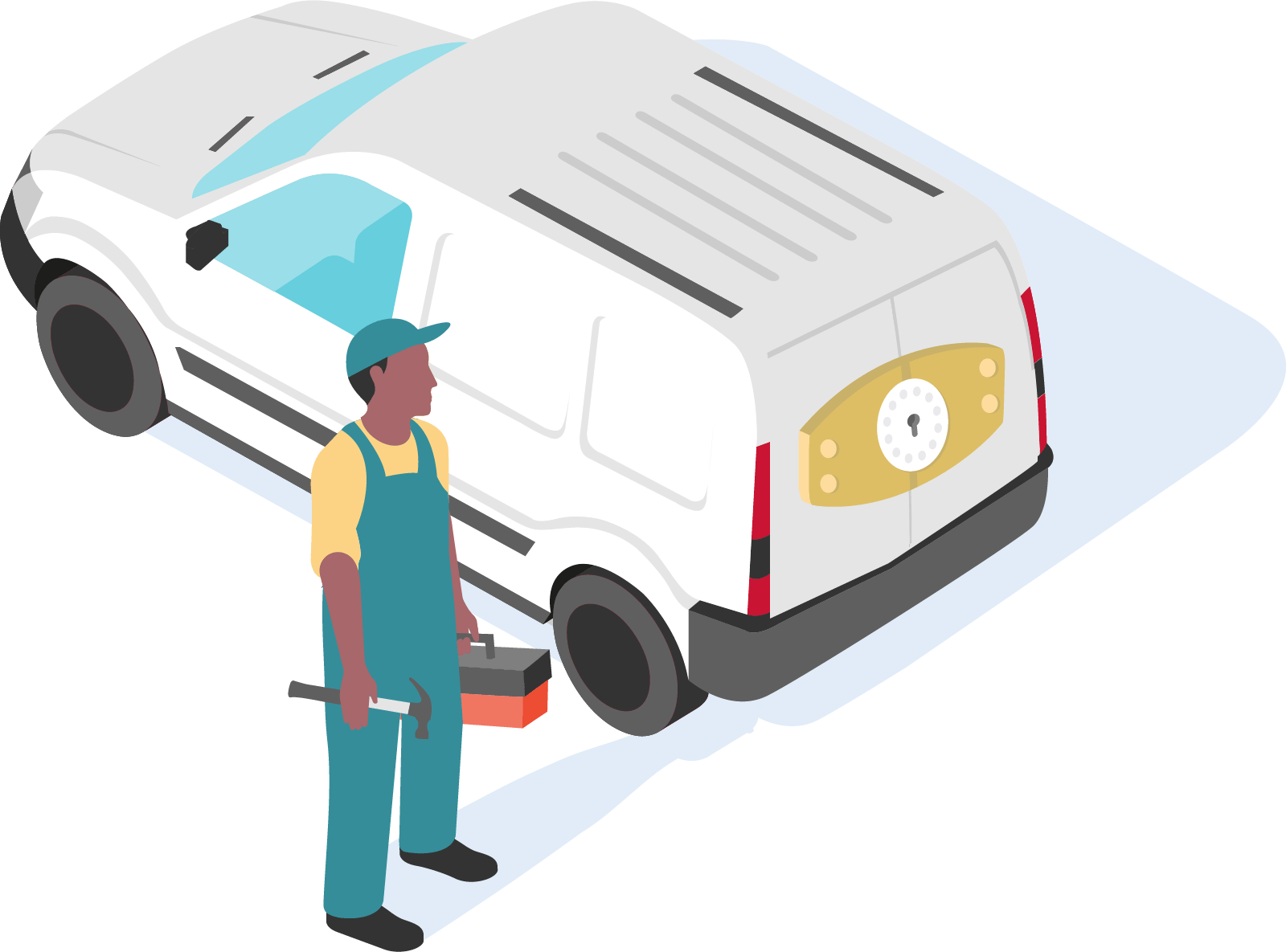
Keeping your key fob safe
You may have heard about key fobs being hacked which, according to car security firm Tracker, accounted for 66% of all stolen vehicles investigated in 2016. Thieves have used a device that communicates with the legitimate key fob, and can unlock and even start the car.
However, there’s a really simple way to avoid these ‘relay attacks’: by keeping your key in a ‘Faraday sleeve’. These little pouches work by blocking the radio transmissions and are cheap and easy to get hold of.
Building modifications
Consider whether features like glazed rear doors are necessary. Covered panels reduce visibility and make your van less attractive to thieves.
You can also:
- Apply security film to windows to prevent shattering
- Install a bulkhead to block the view into the storage area
As with any other modifications you may make to your van, always check with your insurer before doing anything to make sure that any changes you make don't affect your policy cover.
Securing the catalytic converter
Because your catalytic converter is made from metals with a good resale value, it’s yet another target for thieves. Van ‘cats’ are easier to reach and remove than those on cars, so invest in a catalytic converter anti-theft device, which holds it more securely in place.
Prepare for the worst
As the saying goes, hope for the best but prepare for the worst. Taking a few proactive steps now can make a big difference if your van or tools are ever stolen.
Mark your property
You can register your equipment with a system such as Immobilise. This is a database of property ownership which can be accessed by the police to track stolen goods.
Mark your tools with an ultraviolet pen, which are inexpensive to buy and leave an indelible mark that’s invisible until it’s held under UV light. Alternatively, a visible mark can be a deterrent as well as an identifier, and it’s worth getting valuable tools engraved. It’s harder to sell on an item which has been clearly marked.

Taking out business van insurance
Business van insurance will help to keep your business moving should your van fall victim to thieves. It’ll cover any repairs, and most policies will provide you with a courtesy vehicle so that you’re not off the road completely.
To make sure you have the right cover for your tools and other contents or work equipment, speak with your insurance provider, as this is not usually covered in standard van policies.
Making a claim
If the worst happens, having the right information ready can help speed up your claim. Make sure you have:
- Your insurance policy details and contact information saved somewhere accessible
- A list of stolen or damaged items, including serial numbers where possible
- A Crime Reference Number, as all thefts should be reported to the police
Taking steps such as improving security, keeping accurate records and parking carefully can reduce your risk. Having the right insurance in place provides an added layer of protection and helps keep your business moving if something does go wrong.
Van Security Checklist

Park in well-lit, busy areas
Remove tools overnight
Keep valuables out of sight
Always lock and double check
Park doors against walls where possible
Use extra locks or a steering lock
Store keys in a Faraday pouch
Keep your van moving – no matter what
Maintaining the security of your van can be challenging. With AXA van insurance, it’s easy to get the tailored cover you need to keep your van going from A to B.
All links are checked and valid at time of publishing, 10th Nov 2026.