12 DEC 2025 clock face illustration5 MIN READ

Meet the AXA Startup Angel Winners 2025

After our recent Q&A with our two top winners for our 2025 Startup Angel competition, we caught up with this year’s runners up and People Choice Award winner to find out more.

Read on to learn more about the fantastic businesses that should be on your radar this year.

Our two top-prize winners

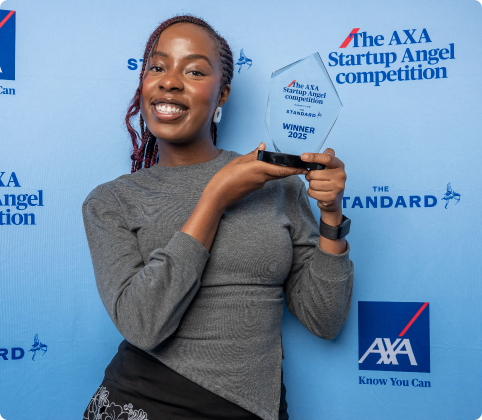
main-squeeze-headshot

Main Squeeze

Founder: Princess Ebi

Inspired by a friend’s struggle with lymphedema and the lack of stylish compression socks for young people with chronic conditions, Princess Ebi developed Main Squeeze - a line of fashion-forward, medical-grade compression socks.

You can learn more about Main Squeeze and their journey so far here.

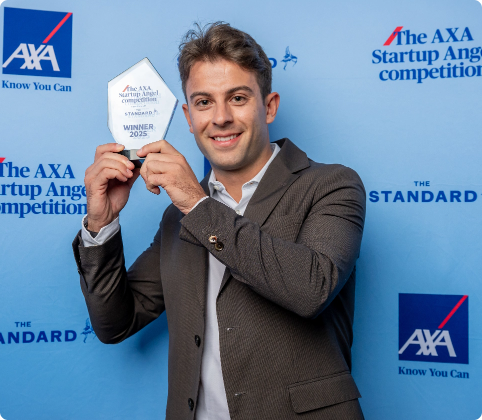
dyamotech-headshot

Dyamotech

Founder: Simone Panella

The world’s first wearable concussion management system for youth teams, Dyamotech’s smart headband tracks G-force and rotational data to monitor internal brain activity, providing instant feedback through an App and team dashboard.

You can learn more about Dyamotech and their business here.

Our runners-up

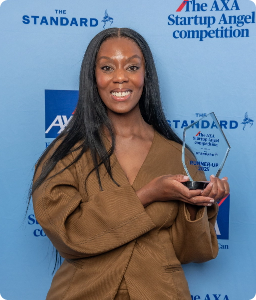
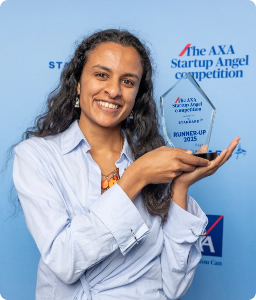
  • tech-tags-headshot

    Tech Tags

    Founder: Denise Stephenson

    In your own words, how would you describe Tech Tags?

    Denise: TechTags is the world’s first AI-powered SmartTag solution developed to tackle returns fraud within fashion retail. Our SmartTags are an intelligent labelling system powered by AI-driven data analytics, helping retailers identify garment usage after sale and distinguish between genuine and fraudulent returns.

    Returns fraud is one of the biggest challenges in retail today, costing UK retailers over £11 billion a year. Practices like wardrobing, tag swapping, and receipt fraud are on the rise, leaving honest shoppers caught in the middle of restrictive returns policies.

    TechTags tackles that challenge head-on by combining advanced data insights with a patented SmartTag. We’ve re-empowered retailers to make fair, confident decisions on returns.

    Our SmartTags are try-on friendly and designed with privacy in mind; they never track personal data. At the point of return, a simple scan reveals a clear indicator: used. Retailers gain certainty, shoppers get transparency, and both sides build trust.

    What’s the motivation behind Tech Tags?

    Denise: Ten years ago, I built a women’s fashion label from my apartment. We grew quickly but returns nearly destroyed us. Customers would wear items, send them back, and I’d be left with stock I couldn’t resell.

    Like many small businesses, I was hit hard. Every return chipped away at my margins, my confidence, and my ability to grow. I remember thinking, “There has to be a better way to manage returns.” But there wasn’t anything on the market that was available or robust enough to tackle the problem. That’s when I knew the industry needed a smarter solution.

    That’s when I invented TechTags, a solution that protects retailers and makes the shopping experience fairer for everyone. I always tell everyone. I can’t sing, I can’t dance but give me a problem and I’ll find the solution. I’m now using my gift of problem solving to reinvent returns management, using AI- powered SmartTag’s and data verification to transform fashion retail.

    What does the future look like?

    Denise: The future for TechTags is incredibly exciting. After becoming a runner-up in the AXA Startup Angel competition, I went on to win an Innovate UK grant, a real turning point for TechTags. We’re now finalising our MVP and preparing to debut at our first major trade show in early 2026. By Q2 2026, we’ll begin our pilot with six incredible retailers.

    We’re balancing speed with strategy, because we’re not just building a product, we’re building a legacy. TechTags is pioneering a smarter, fairer, and data-driven approach to returns management, setting the global blueprint for how fashion handles (any) returns. Our mission is to bring a robust, intelligent solution to the market that protects retailers, empowers honest shoppers and redefines what fair returns look like in fashion retail.

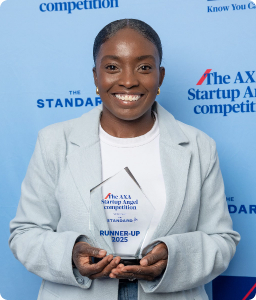
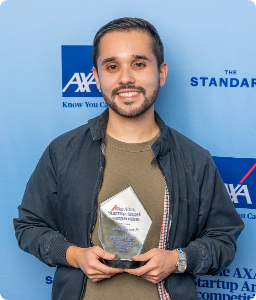
  • think-pieces-headshot

    Think Pieces

    Founder: Christina Lartey

    In your own words, how would you describe Think Pieces?

    Christina: Essentially, Think Pieces is all about creating fun ways to teach children about money. So, we focus on the basic concepts around money like savings, budgeting, and things like that. To do this, we provide gamified financial education activities in many ways.

    One of the ways we do this is through school workshops. We go into schools and deliver financial education workshops through games. And this is not just a one-off workshop; we’ll do continuous workshops throughout the year so that they have ongoing learning.

    The other ways are through our jigsaw puzzles. We have money-themed jigsaw puzzles which focus on different money topics. Children learn as they put pieces together about the subject through the messages on the puzzle and the illustration. With these, we’re breaking down a concept to make it very visually engaging and easy to understand.

    What’s the motivation behind Think Pieces?

    Christina: I guess the reason why I’m doing what I’m doing is that the business is essentially a social impact business, and it’s about financial education—which I’m very passionate about. I studied finance at university, and I’ve always worked with children in a lot of the jobs that I’ve done. So, it’s something that I love doing! I’ve also worked in financial education before I started this business. So, it’s just something that I’m very passionate about. When things get a bit tough, or doubts come up, I remember why I’m doing it, and because I’m passionate about it, it makes it a bit easier.

    I now go into the schools myself to do the workshops, and just seeing the reaction from the kids and understanding how much they are learning, and thinking about the future and how much that will make a difference and impact how they’ll manage their money in the future.

    I think the reason why I’m doing what I’m doing, and what keeps me going, is because it’s what I’m passionate about.

    What does the future look like?

    Christina: We’ll be moving towards a model where school workshops are accompanied by the app—which launches in January, but that will be in a testing phase.

    So, for the next academic year, from next September, that should be the full programme rolled out. That’s including the app and the workshop together, to all of our schools and our partner schools.

  • huid-headshot

    HUID

    Founder: Renuka Ramanujam

    In your own words, how would you describe HUID?

    Renuka: HUID converts onion waste into scalable circular materials for food packaging. Single-use plastic is an obvious issue, and there is an abundance of natural resources that can do the job. In our case, we are taking an example of nature’s own packaging – the dry outer part of the onion skins – and converting it into a format that works with packaging infrastructure now. Better yet, it’s a waste product, and one that is globally abundant, meaning it can be produced at scale, regionally. This prevents shipping packaging from one corner of the earth to the other to be used one time!

    We are also working with onion packers and growers, to try and support them through our business model by giving them some income for their waste (that they often pay to get rid of). We want to support agricultural resilience – growers are the backbone of nations and are suffering with reduced government support.

    What’s the motivation behind HUID?

    Renuka: Growing up in South East Asia, I saw firsthand mountains of plastic being dumped, burned and even being sorted by children. I learned that a lot of this waste was being exported from western countries, who were able to achieve their recycling targets whilst these communities handling this waste were dealing with health and environmental issues from this ‘trade’. A lot of the bio-based material solutions I was seeing were limited by their raw materials and factories being concentrated in one region of the world; as a result the packaging or raw materials were being shipped across the world to be made into finished products – which is a crazy footprint for a single-use product! I was using onion skins for a textile dyeing project – I’m a textile designer by background – and after boiling them for hours, they still seemed quite robust! I started wondering if they could have other applications, and after a little bit of research and a lot of experimentation we’re here!

    What does the future look like?

    Renuka: We’re doing some scale-up trials of our onion skin pulp to see how we can make it more efficient to produce at scale, and doing some trials of our first product – onion skin pulp – in fibre-based packaging with paper mills, packaging manufacturers and large retailers. Onion skins also have lots of other interesting parts to them aside from fibre; food ingredients and anti-oxidants! We’re looking to develop more materials using more of these components, such as flexible films with shelf life extension properties for fresh produce.

Our People’s Choice winner

  • silly-sarah-headshot

    Silly Sarah

    Founder: Anthony Pachon

    In your own words, how would you describe Silly Sarah?

    Anthony: We’re essentially a natural toothpaste brand that is safe to swallow. And what we really want to do is make brushing fun for kids. So, our mascot is Sarah the silly hedgehog, and essentially, we have little educational videos and things like that. And we really want to make children enjoy either going to the dentist or brushing their teeth. We have really cool, unique flavours - we have strawberry, mango and marshmallow, and they’re all completely safe to swallow, natural and non-toxic! There are no toxicity issues whatsoever with that.

    What’s the motivation behind Silly Sarah?

    Anthony: Silly Sarah came from my work as a dental hygienist, and seeing the impact of tooth decay on children’s health, which is still the leading cause of hospital admissions for young children in the UK. With NHS dentistry under such pressure, I wanted to create something that gave parents peace of mind and helped prevent problems at home.

    Winning the People’s Choice Award really confirmed that, as parents often told me they worry about children swallowing toothpaste or that they struggle to access regular dental care, so the message clearly resonated.

    What does the future look like?

    Anthony: Looking to the future, other than rolling out more flavours children would enjoy - such as marshmallow and caramel!, we’re also exploring ways to do more in the community. We plan to work with local dental practices and councils to give away Silly Sarah toothpaste alongside free exams and cleanings for families who find it difficult to access these services. We’re also planning work in schools and nurseries, providing educational materials and activities that make learning about brushing fun and memorable for both children, and adults.

    What does it mean to you, to be named The People’s Choice winner?

    Anthony: For me, the greatest benefit of winning the People’s Choice Award is the chance to spread awareness. Every parent we reach is one more child with a better chance of avoiding hospital admissions. And in the long term, that means less strain on an already stretched NHS.

  • information icon

    Watch this space for more updates from this year’s fantastic Startup Angel winners and runners-up, as we share more articles in the coming months!

    In the meantime, you can find hundreds of helpful and free articles to help you get started on our Business Guardian Angel hub.

Thinking of starting your own small business?

If you’ve got a brilliant business idea and want to turn it into a reality – why not check out when the next AXA Startup Angel competition launches?