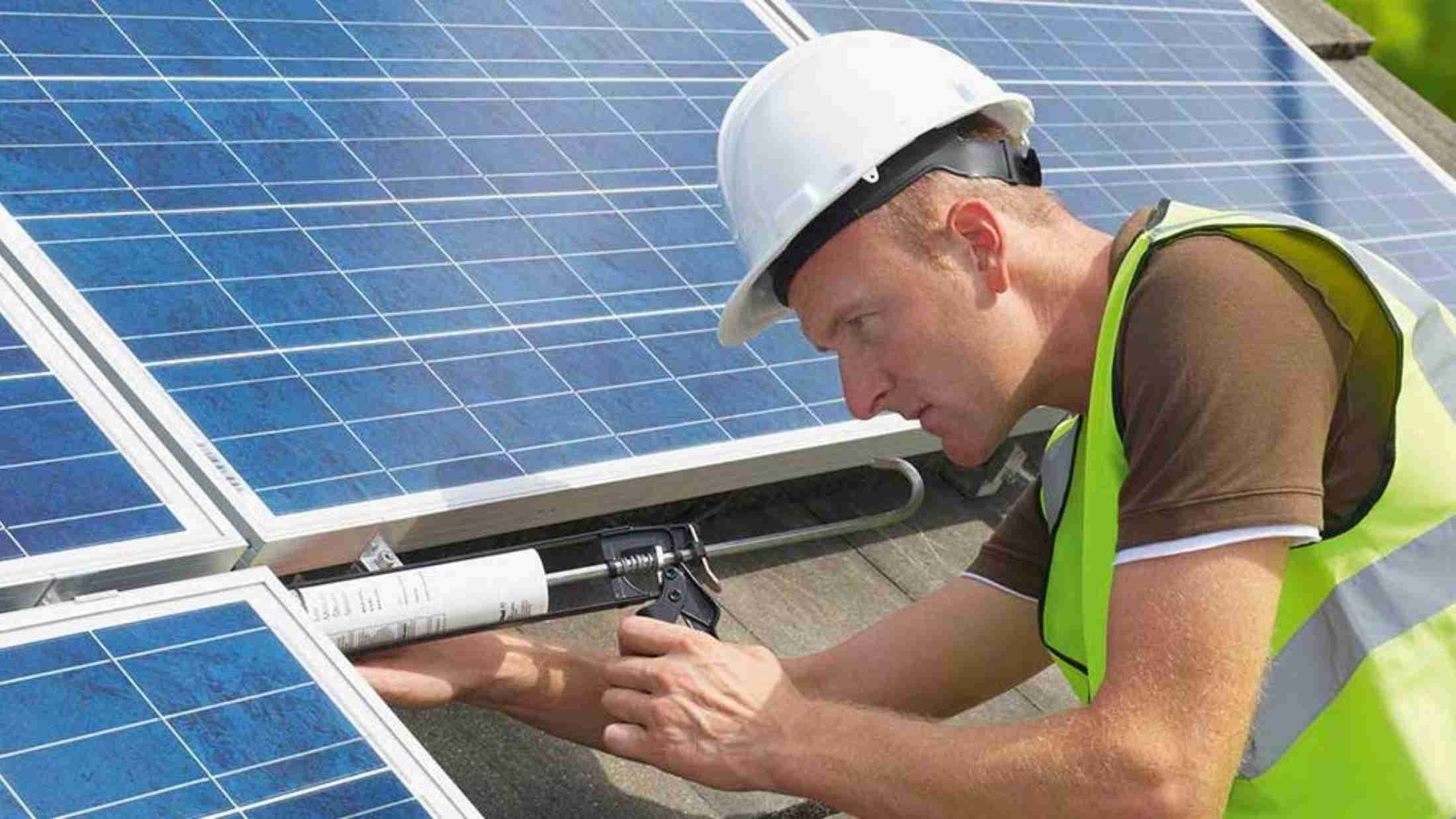
The cost of solar panels has reduced by 90% globally, so now may be the perfect time to consider adding solar panels to your home.
You may not associate the UK with sunny weather, but the Met Office shared that we had the sunniest spring on record in 2025.
- Do I have room for solar panels?
- Will solar panels work for me?
- Selling power back to the National Grid
- Solar panels are a longer-term investment
- How to get started
- Be cautious when buying
- Maintaining your panels
- Are solar panels covered by home insurance?
- One last thing...
Do I have room for solar panels?
Here are a few things to consider before getting solar panels:
- A south-facing roof is best, as it will get the maximum exposure to sunlight each day.
- Roof pitch. The ideal angle is 30–40°, but don’t worry if your roof isn’t at this angle. Most suppliers can adjust when fitting the panels.
- Throwing shade. The less shade your roof gets, the better it is for solar panels.
- Roof space. A typical solar panel takes up 2m² of space, with average space needed for a typical 3-bedroom semi-detached home being 70m². For a 3.5 kilowatt peak (kWp) solar system (which’ll be enough for most three-bedroom homes), you’ll only need around 25-30m² of roof space.
- Weight. Each panel weighs roughly 18-22kg, so check that your roof is structurally sound for the extra weight that solar panels can bring.
Before you install solar panels, you’ll want to check if you need planning permission. You can find out through the government's Planning Portal.
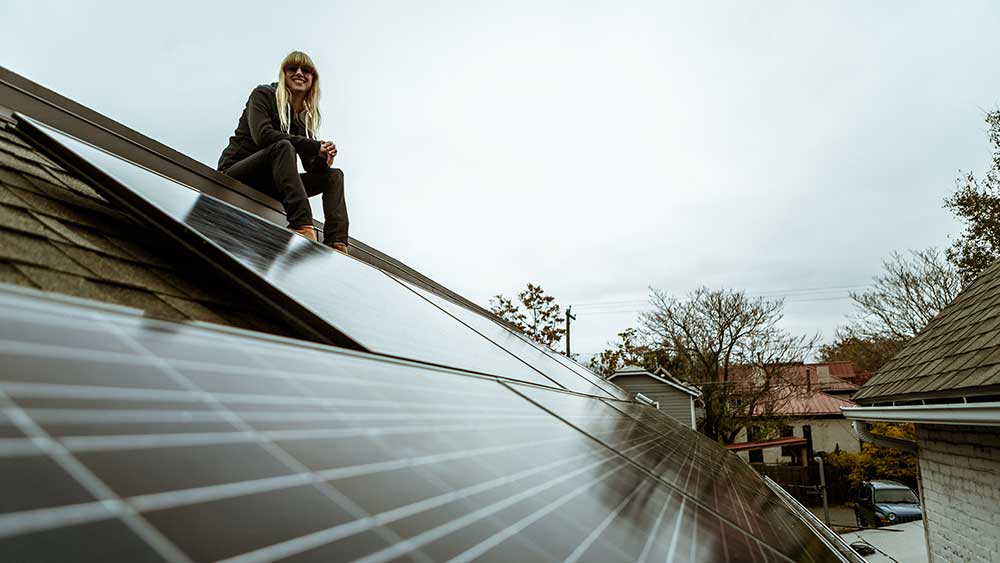
Will solar panels work for me?
Solar power on its own is unlikely to provide all your power needs. But many households are installing them simply because they want to do their bit for the environment.
The Energy Saving Trust has a handy calculator to help you look at the costs and savings associated with solar panels.
Selling power back to the National Grid
Under the Smart Export Guarantee scheme (SEG), if you don’t use all the power you generate yourself, you can send it back to the national energy grid.
You can find out more information about this on the Energy Savings Trust's website.
Solar panels are a long term investment
On average, it takes 5-7 years to recover the initial cost of solar panels.
However, this time varies on a number of factors, like how often you’re at home and your location.
If you’re serious about solar energy, you might also want to think about investing in solar batteries for better storage. Which? have a useful article that includes the average cost, plus the pros and cons.
How to get started
Here are our top tips on getting started with solar panels:
- Pick three reputable firms and get competitive quotes in writing.
- Make sure they have all the right accreditations and belong to the requisite trade associations.
- Make sure your quotes are like-for-like (what seems like the cheapest quote might not be).
- Expect the panel fitting to take 1-2 days. However, the work all around it takes longer (scaffolding, removing the existing roof, internal wiring, dealing with your energy supplier, adding a meter, etc.)
- Once they’re fitted, you’ll need to register them for an MCS certificate then you’re all set.
Be cautious when buying
It’s worth being cautious when looking at how to fund your solar panel purchase.
Some solar companies can offer a loan to cover the cost of the panels. However, if you do this, it could be an issue when you come to sell your home. This is due to a lien (loan agreement) being placed on your home, and it will be very difficult for the buyer to get a mortgage.
Buying a house with fully owned solar panels is completely different. No lien? No problem.
Depending on where you live, there may be loans or grants available to help with the cost of solar panels:
- Scotland has the Home Energy Grant and Loan scheme.
- If you live in Wales, check if you’re eligible for free energy efficiency improvements from Nest.
- England also has various grants and loans available.
Maintaining your panels
Although solar panels are usually good for around 25 years, here’s some of the costs you can expect to have:
- Annual service: £100-£200, depending on the provider.
- Cleaning: £4-£15 per panel every 6 months, depending on which cleaning company you use.
- Inverter replacement: £800-£1,000. This will need to be replaced every 25 years. An inverter changes the direct current (DC) to an alternating current (AC).

Are solar panels covered by home insurance?
If you have an AXA home insurance policy, your fixed solar panel system is covered under the buildings element of your cover, for things like storm or fire damage, or malicious damage. Make sure to include the replacement value of the solar panels when looking at the amount of buildings cover you need.
AXA policies also cover solar panel batteries. If they're fixed to the building and are considered a fixture or fitting, they may be covered under your buildings cover. However, in most cases they would be covered under your contents cover if you’ve opted to have that. Make sure to check your policy wording to check what is (and isn’t) covered, and include the replacement cost of the panels in any buildings or contents cover you need.
If you have a problem with your panels, contact the installer or manufacturer, so they can send out a professional technician to investigate.
Please don’t try to fix them yourself, as you can invalidate your warranty.
And keep hold of any receipts and warranties. If thieves do decide to get up on your roof (even though solar panels can’t easily be transferred from one property to another), we want you to be able to get you back up and running as soon as possible.
One last thing...
When choosing an installer, please make sure they belong to all the relevant trade bodies and standards:


