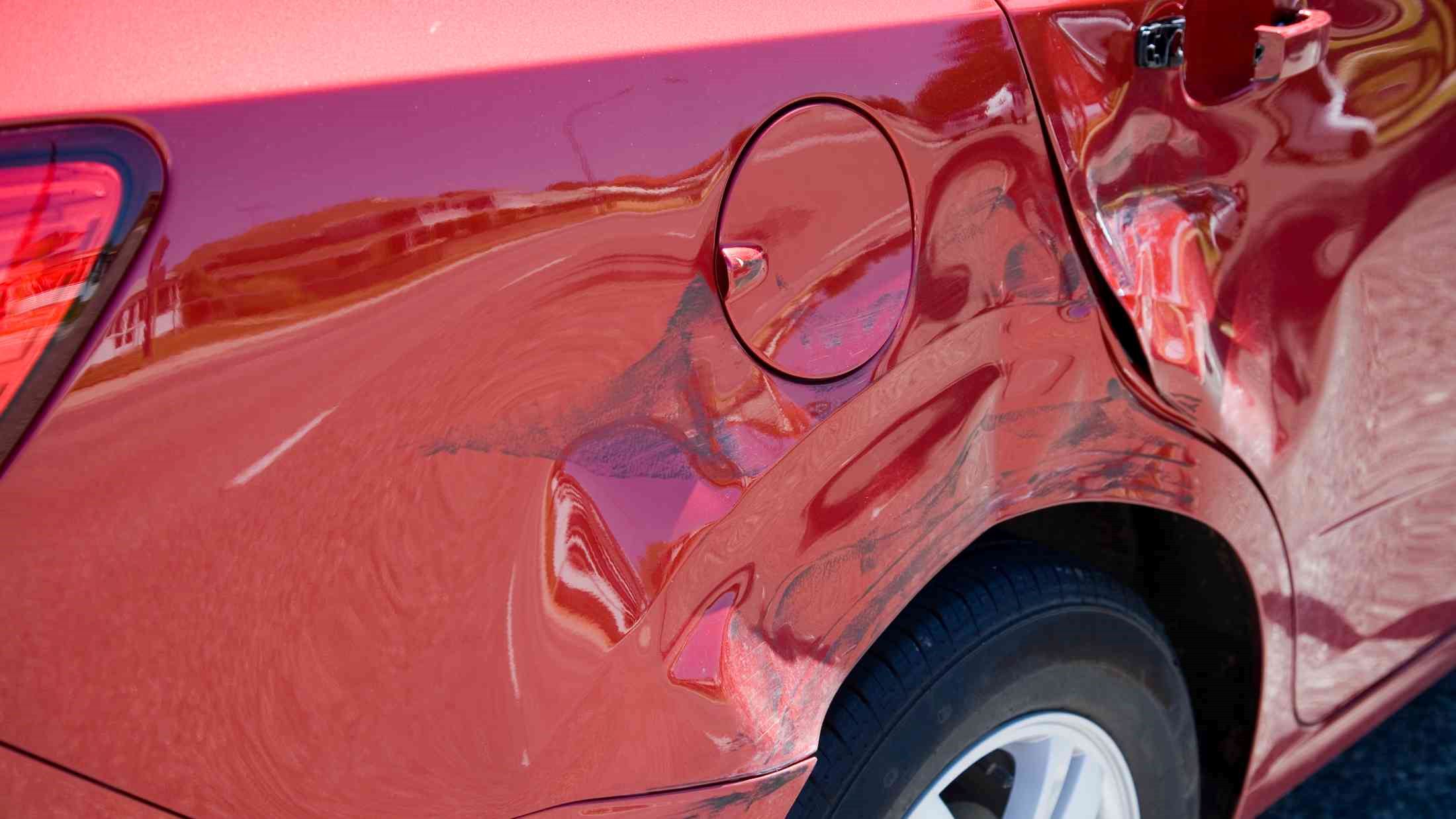
If you’re involved in a car accident, your car could be badly damaged. Ideally, you want your car repaired and back on the road as soon as possible. Your insurer will now have to decide if the cost of repairing your car can be covered. If it is covered, your insurer will pay for your repair. However, if the cost of your repair is more than what your car is worth, it will be declared a “total loss”. But how does your insurer work out these costs? AXA found that only 25% of car owners know what happens with their insurance after a total loss1. So, here's the steps your insurer takes when determining if your car is worth repairing, or a write-off:
- Step 1: Calculating your car’s value before your claim
- Step 2: Calculating repair costs
- Step 3: Comparing your car’s value and the repair costs
- Other factors that are considered
- What happens when a car is declared a total loss?
Step 1: Calculating your car’s value before your claim
Your car’s value before your incident will be the benchmark when your insurer decides if it’s a total loss. Your insurer will determine your car’s value based on the following:
-
Age of the vehicle
Due to wear and tear, older cars are often worth less than newer ones. -
Mileage
The number of miles on the clock can impact the car’s value. Lower mileage is an indicator that the car likely has less wear and tear. -
Condition
This includes scratches, dents and rust, as well as mechanical issues. A well-maintained car with no visible damage would have a higher market value. -
Make and model
Some car models are more popular than others. This means their parts might be easier to find than other niche car models. Luxury brands tend to be more expensive.
Step 2: Calculating repair costs
Once the value of the car has been decided, your insurer needs to work out how much it would cost to restore the car to its pre-accident condition.
What goes into calculating repair costs?
-
Parts replacement
Your insurer will calculate the cost of any parts that need replacing. For example, if your wing mirror was damaged and it needs new glass, the cost of replacing it will be included in the overall cost. -
Labour costs
This would usually be included in the repair quote you get from a trusted repairer. -
Structural damage
Sometimes, visible damage is just the tip of the iceberg. There’s a possibility of hidden damages, such as:- Frame misalignment. This is when the car’s structure bends out of its usual shape.
- Suspension issues
- Internal mechanical damage to areas like your engine or transmission
What if repairs uncover more damage?
During repairs, mechanics can find issues that weren’t visible before. This can cause repair costs to rise, sometimes pushing the repair cost above estimates.
Step 3: Comparing your car’s value and the repair costs
If the car’s value is more than the cost of the repair
The car will likely be approved for repair, as long as the car is safe to drive once the repair is complete. It will be sent to a repairer on your insurer’s approved network. You can use your own repairer, but this may result in extra fees and take a little longer.
If the car’s value is less than the cost of the repair
You may be offered money to cover the current value of your car instead of a repair. Your insurer will then take possession of the car and either given a salvage title or scrapped.
Other factors that are considered
The main comparison is between repair costs and vehicle value. But insurers also consider other important elements to make a fair and safe decision:
-
Safety
Deciding if the car is safe to drive is the top priority. Even if the car can be repaired economically, if the car isn’t repaired to a safe condition, insurers will declare it a total loss.
-
Future Resale Value
If the car has been severely damaged, even after repairs, it might be worth less than before. The insurer will consider whether the repaired car will be a valuable asset after the repairs.
-
Salvage Value
Even damaged cars hold some value. Parts can be sold separately or the car can be scrapped. This is called ‘salvage value’ This salvage value is deducted from the total payout. For example, your damaged car has a salvage value of $2,000. The insurer will consider this when calculating the payout.
What happens when a car is declared a total loss?
If the insurer decides that repairing your vehicle is not safe or cost-effective, they will declare it a total loss. After this happens:
-
You could get a payout
Your insurer may pay out the market value of the car before the accident, minus your excess. You can then use the money to replace your car. -
You may be asked to sign over the car
If the total loss is a Category B or higher, it won’t be safe to drive even if it’s repaired. Your insurer may then ask you to sign over your car to them. They will either salvage it for parts or scrap it. -
If you buy a new car
Usually, you can keep your current policy active and change it to cover your new car. If you cancel your policy, you won’t get a refund, as a claim has been paid.
If you need to get a quote for a new car, check out AXA car insurance and get a quote today.
For more information about total loss, check out our ‘understanding total loss’ guide.
A handy way to think about this process is: if fixing the car costs more than it’s pre-accident value, it’s a total loss. If fixing the car costs less than its value and the car will be safe to drive, it’s likely it will be repaired. If you’ve been involved in an accident, you should file a claim with your insurer as soon as possible.
Qualifiers
1 According to a survey conducted by AXA on 259 respondents in May 2026.