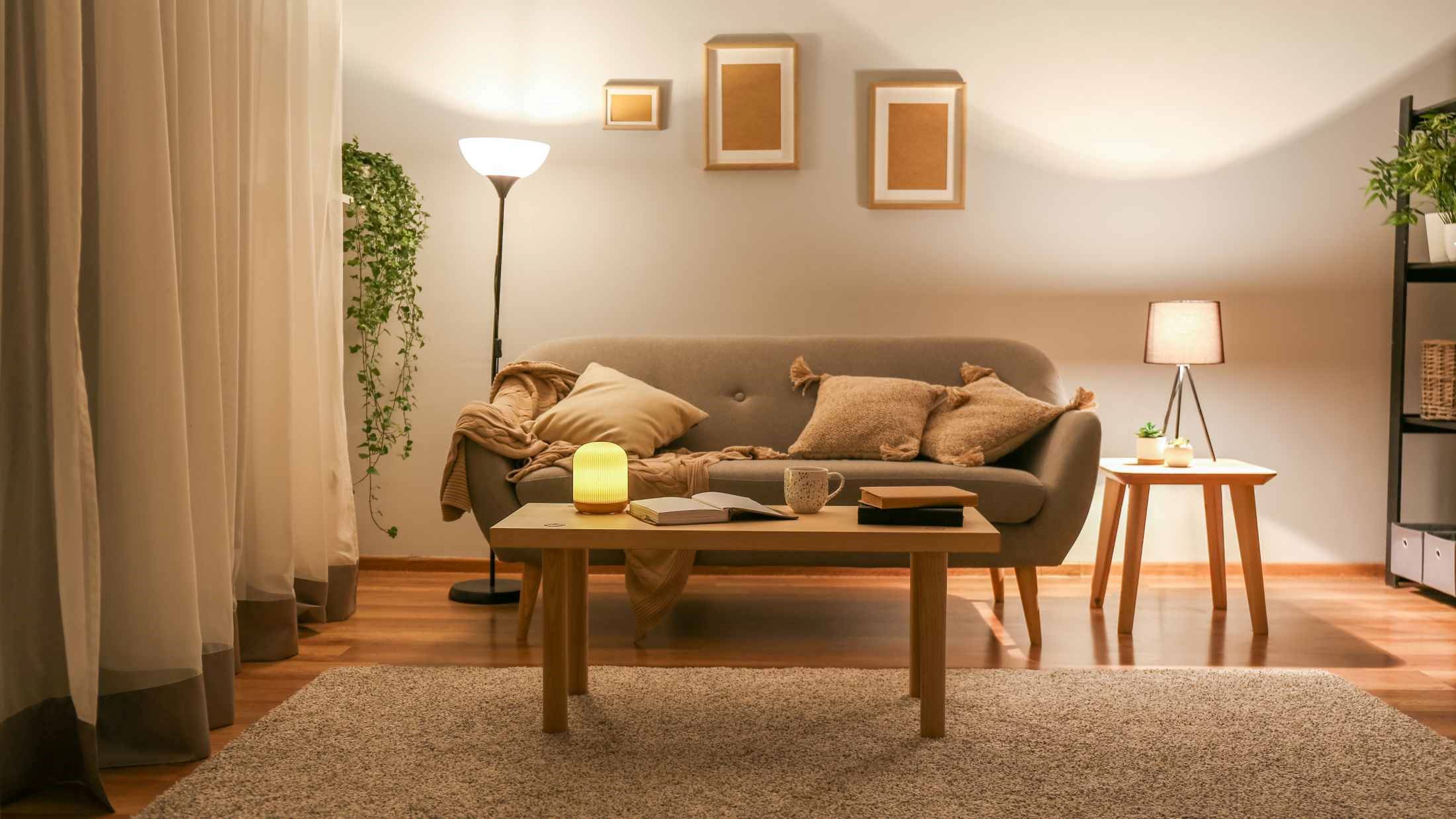
Keeping your home neat and tidy can feel like a big job. A survey by AXA found that 75% of homeowners feel their home could be better organised1. Sorting out messier areas of your home can be overwhelming if you don’t know where to start. Taking it slowly and step-by-step is the key to achieving your home organising goals. This guide will show you easy ways to save space, reduce mess, and make your home feel calm and comfortable:
- Re-use items in your home
- Use your vertical space wisely
- Think about your hidden spaces
- Only keep the important things
- Group similar items together
- Label items in storage
- Use multi-purpose furniture
- Do a bit every day rather than all at once
Re-use items in your home
Before you go shopping for storage boxes or baskets, take a good look around your home. You might be surprised by how many useful things you already have.
Repurposing items is an environmentally friendly, low-cost way to create more storage. Take old cardboard boxes and decorate them with fabric or decorative paper. Clean out glass jars and store smaller items, like spare change or pens. Need drawer organisers? Shoe boxes can do the trick! You can give old items you’d usually throw away a new lease of life while helping yourself get your drawers and cupboards in order. You’ll save money, and the environment.
Use your vertical space wisely
Keeping all your stuff on the floor can make a room feel crowded and messy. Try storing your items vertically to free up some of your floor space. You can stack your boxes on top of each other in a corner, or install some shelves to display some of those knick knacks you’ve had stashed away for years. Put up some wall hooks for those house keys you always lose.
Using your higher spaces means you’ll be able to move more freely around your home while appreciating your valuable items. Plus, anything not on display will be stored nicely, so sorting through them will be more manageable.
Think about your hidden spaces
Some places in your home may not be considered great storage space. But with the right tools you can convert many spaces into great storage areas. For example, you may think the space under your bed is too small for storage. Grab some flat boxes or vacuum seal bags - then you can keep clothes, shoes, or spare bedding there. You could even do the same under your sofa. Behind doors is another useful area. You can hang hooks or over-the-door organizers to store items like scarves, bags, or cleaning supplies.
Only keep the important things
Letting go of items you’ve held onto for years can be challenging. It’s likely most of them are still in your home for sentimental reasons, reminding you of good times. However, these items often aren’t very useful and can add to your clutter. Letting go of some of these items will really help to make more space for the belongings that really matter.
Go through your belongings and ask yourself these questions:
- Do I use this?
- Will I display this?
- Do I really need it?
If the answer is 'no', it might be time to let it go. You can donate items to charity, recycle, or give things to friends and family. There’s also many apps and websites where you can sell your unwanted trinkets, so you can make a bit of money while you declutter. It can feel hard to get rid of things at first. But once you do, your home will feel lighter and less crowded. You’ll also find it easier to keep things tidy.
Group similar items together
Categorise your items by use and store everything of the same type in one place. This means that if you’re looking for the bleach spray or a pair of scissors, you’ll always know where to look. For example, cleaning supplies can be stored under the sink in your kitchen, whereas practical supplies like tape or scissors can go in the living room drawer.
When everything has a “home,” it’s much easier to stay tidy. You won’t waste time looking for things, and your space will feel more organised. This will also help those who live with you to keep things tidy too.
Label items in storage
Something as small as a label may seem like a small detail, but it can help a lot with knowing which items you’ve put in different places. They can turn a stack of unmarked boxes into organised storage areas, as you will be able to see what’s inside at a glance.
Use multi-purpose furniture
If you do decide to buy something new, try to choose furniture that has more than one way of functioning. This can save a lot of space by serving two purposes at once. For example, a bed with drawers underneath gives you extra storage without needing more furniture. A stool that opens can be used for sitting and storing items at the same time. A table with shelves can hold books, baskets, or other items. Multi-purpose furniture is especially helpful in smaller spaces, where every foot of space counts.
Do a bit every day rather than all at once
You don’t have to tackle your clutter all at once. Doing a little bit every day is easier to manage and often more productive in the long term. Spend just 10 minutes a day tidying up. Put things back where they belong after using them. Wipe down surfaces or organize a small area. These small actions add up over time. They help stop mess from building up and make cleaning feel less overwhelming.
You can work decluttering into your daily routine, too. For example, you could make it a rule that you will do 10 minutes of decluttering every day after dinner, or sort out one storage box of items every morning before work. Over time, this will become a habit you naturally do, and your space will be decluttered before you know it.
Organising your home can be a long, daunting process. But if you use the items already available to you, take it one step at a time and assess what you really need, you can turn your home into your tidy personal haven. Want to keep your belongings protected while you embark on your organisation journey? Why not check out AXA home insurance and get a quote.
Qualifiers
1 According to a survey conducted by AXA on 258 respondents in May 2026.