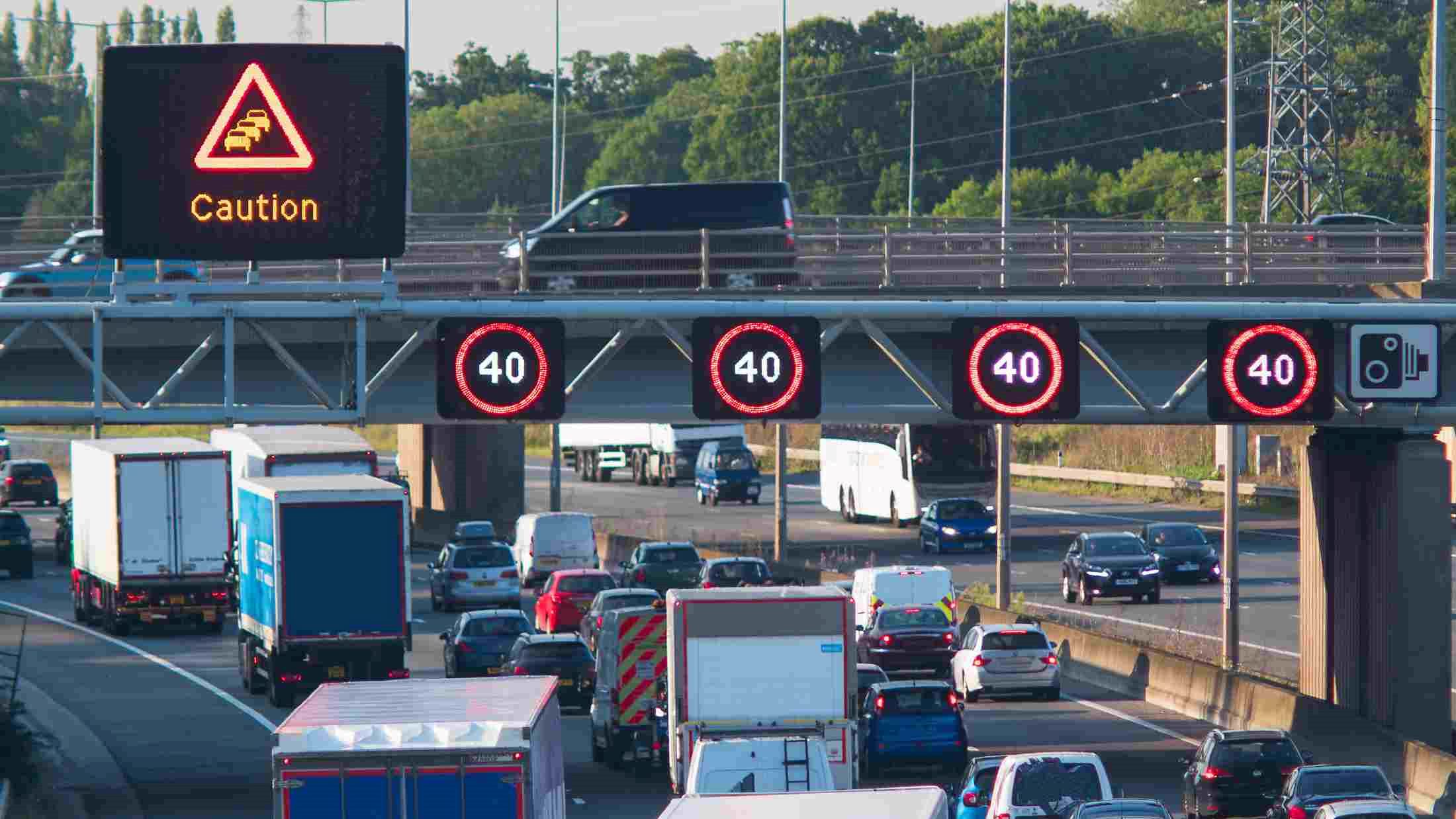
Highways England developed smart motorways to manage traffic without the typical cost and time constraints. They have variable speed limits depending on traffic, which can help prevent traffic jams. Controversially, many smart motorways have no hard shoulder which can leave drivers with nowhere to go if they have a breakdown.
So what makes smart motorways different? How safe are they? And what should you do if you break down on one? Our handy guide is here to help:
- What is a smart motorway?
- How do smart motorways work?
- What do the signs on smart motorways mean?
- Are smart motorways dangerous?
- What should you do if you breakdown on a smart motorway?
What is a smart motorway?
Smart motorways use tech to assess and manage the flow of traffic. They respond in real-time to congestion, roadworks, and accidents. They may even be all-lane running motorways, where the hard shoulder is used as a regular driving lane.
According to National Highways, about 25% of our motorway network is ‘smart’. Check out their handy 3-minute video for more information on smart motorways.
How do smart motorways work?
Using CCTV, radar, and sensors, smart motorways serve drivers with speed restrictions and lane closures if they spot accidents or congestion. So if there’s a queue building up ahead, speed limits might be lowered to ease congestion and allow the jam to disperse.
What do the signs on smart motorways mean?
Smart motorways give motorists information using two kinds of overhead signs:
-
Individual lane signs
These are small, mounted signs over each lane. These signs let drivers know if a lane is open or not. They either display a red X (closed) or the speed limit (open). You’ll need to stick to these speed limits just as you would on any other road. If you don’t, you could be fined. -
Large overhead signs
These normally display more complex messages, such as ‘expect delays’, or ‘queue ahead’. They provide information applying to the whole road, not just a specific lane.
Are smart motorways dangerous?
There have been safety concerns about smart motorways – especially around the lack of hard shoulder. While the sensors should detect if a car’s crashed or broken down, this doesn’t always happen. This has left some motorists trapped in a ‘live’ lane but unable to drive, which is a scary and dangerous position to be in.
The government aren’t developing new all-lane smart motorways until more safety data is collected. For extra safety, Emergency Refuge Areas (ERAs) are being added to some smart motorways in the meantime.
What to do if you breakdown on a smart motorway
-
Leave the motorway at the next exit or pull into the services
This is the best option if you spot a warning light on your dashboard or feel something’s not right with your car. -
If the problem’s more immediate, use an Emergency Refuge Area (ERA) if you can reach one safely
Turn your hazard lights on, then leave your car carefully and stand behind the safety barrier. Even if it’s raining, cold or dark, keep well away from your car and moving traffic. Use the emergency phone to call National Highways, and get in touch with your breakdown provider. -
Can’t reach an ERA or get stranded in a live lane?
Stay in your vehicle with your seatbelt fastened, and hazard lights on. Dial 999 immediately and ask for police. They’ll help adjust the smart motorway to close the lane you’re in. Make sure you call National Highways on 0300 123 5000 - and your breakdown cover provider, too.
You’ll find more advice on what to do if you breakdown on a smart motorway on the National Highways website.
Hopefully this guide has helped you understand more about smart motorways. Plus, you now know what to do if the worse happens and you find yourself breaking down on one.
And, if you’re looking for car insurance cover for your commute or next road trip, check out AXA. We’ll help you make sure your car’s always protected - whatever might lie on the road ahead.


