- What is a catalytic converter?
- Where is a catalytic converter located, and what does it look like?
- What does a catalytic converter do?
- How long does a catalytic converter last?
- Catalytic converter theft
- Catalytic converter problems
- Is my catalytic converter covered by insurance?
What is a catalytic converter?
A catalytic converter may sound like it’s something pulled right from a Star Wars movie, but really, it’s just part of your car. And a pretty important one at that. These converters clean up the harmful gases emitted from your engine before they can escape through your exhaust pipe.
Many cars have a catalytic converter – but it’s probably not something most of us ever think about. However, they can be a target for theft, so it’s worth knowing your stuff.
Where is a catalytic converter located, and what does it look like?
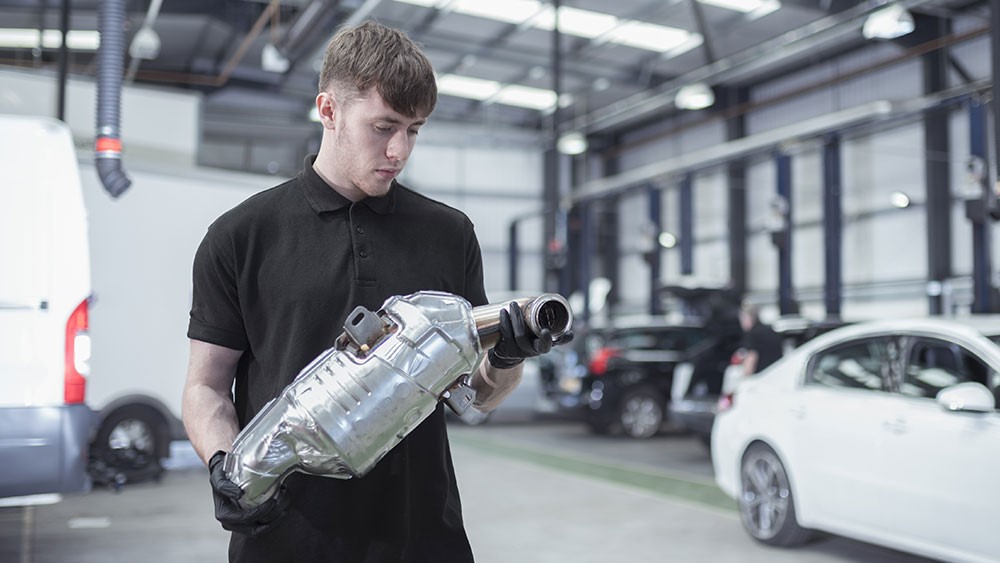
To find your catalytic converter, look for a box shape that can be found somewhere between the engine and the exhaust system underneath your car.
We know not everyone is a mechanic, but don’t worry, we can help you with what to look for. Your catalytic converter looks like an exhaust silencer, only slimmer and smaller. Imagine a honeycomb. That’s what you’re looking for inside. These honeycomb-like passageways are made of small ceramic beads coated with a catalyst.
What does a catalytic converter do?
Your car’s exhaust produces some pretty nasty chemicals: hydrocarbons, carbon monoxide, and nitrogen oxides. These are harmful if they’re released directly into the air. To prevent this, chemical reactions in your catalytic converter break down these harmful gases, turning them into water, carbon dioxide, and trace amounts of other relatively harmless gases.
How long does a catalytic converter last?
You may wonder how often you’ll need to replace the catalytic converter in your car. Fortunately, they’re built to last. A brand-new catalytic converter should be good for about 10 years, and anywhere between 70,000 and 100,000 miles of driving, so you may never need to change it.
However, it’s a good idea to get it checked from time to time. A quick internet search will let you know the closest specialist, with some national chains offering a free check.
Catalytic converter theft
As valuable, rare metals are used in their construction, catalytic converters can be a target for theft. However, there are a few things you can do to keep your car safe. You may even be doing some of them already:
- Keep your car in your garage whenever possible.
- If you don't have a garage, park close to a wall or kerb with the exhaust up to the kerb.
- Avoid parking your car half on the pavement and half on the kerb.
- Park in busy and well-lit areas if you can.
- Be cautious of people who appear to be working under cars with angle grinders or other cutting equipment out in the open, somewhere like a public car park. This may actually be someone trying to remove a catalytic converter.
- If your car is a high risk, consider marking the metal shell with a unique mark. That way, if it’s stolen, it will be easier to trace it back to your vehicle.
- Alternatively, ask your garage to etch a serial number on the converter
- Invest in a protective lock or cage for your converter. These kits often come with warning stickers you can fix to your car’s window to deter a potential thief from trying to steal it in the first place.
- Install alarms and security cameras.
Some cars are more vulnerable, thanks to their size and design. So, if you’re the proud owner of any of the following, keep your eyes peeled for theft:
- Tall vehicles (4x4s, for example) are particularly vulnerable. Their size makes them easy targets, and since they tend to have larger engines, which means more precious metals.
- Hybrid vehicles – their converters often include more precious metals.
- Older petrol vehicles – due to their catalytic converters being more exposed and therefore easier to access.
Catalytic converter problems
Spotting problems with your catalytic converter may be tricky, so a trip to a local mechanic is your best shot at answers. But here are a few easy things to look out for:
- A ‘rotten egg’ smell from your exhaust
- A change to your car’s fuel consumption - using more (or less) fuel than usual
- Dark exhaust smoke
- Discolouration of the housing that protects the converter
- Poor acceleration and lack of power from the car
- Rattling sounds coming from under your car
- The ‘check engine’ light is on
- Issues with starting your car
- Worse engine performance, like misfiring.
Is my catalytic converter covered by insurance?
At AXA, we know not everyone is a car expert, so we’ve got your back. Our car insurance policy covers you if your catalytic converter is stolen. Meaning one less thing for you to worry about.


